Artificial intelligence technologies have accelerated through development to transform various industries while producing both positive prospects and technical difficulties. Alation Inc., the data intelligence leader, pioneered its Agentic Platform and AI Agent SDK through an announcement for organizations that need help managing complex data operations. Through autonomous AI agents and SDKs, Alation Inc. develops solutions that seek to transform enterprise data management capabilities by providing both self-sufficient AI agents and program creation capabilities to developers. This article examines Alation's new offerings, distinctive features, organizational impact, and the revolutionary nature of its solutions.
 Data catalog systems from the past failed to adapt effectively because of the explosion of data quantity and advanced governance needs. Through the Agentic Platform, Alation created a new generation of data catalogs that use autonomous AI agents to automate key operations related to data discovery, governance, and compliance management processes.
Autonomous agents on the platform identify relevant datasets between company silos, which helps both eliminate manual work processes and speeds up access to essential insights.
The agents implement governance policies from the organization to maintain regulatory compliance. This functionality is vital since new data privacy regulations are emerging.
Resolving uncompleted metadata requires extensive time from data teams. The agents at Alation handle these matters independently to maintain accurate documentation and enhance dataset reliability.
Through the platform, users can initiate projects in various domains, including AI, BI, and regulatory compliance, which makes it suitable for multiple industries.
AI Agent SDK toolkit allows developers to create specific business-centered AI agents through Alation's Agentic Platform. This SDK provides:
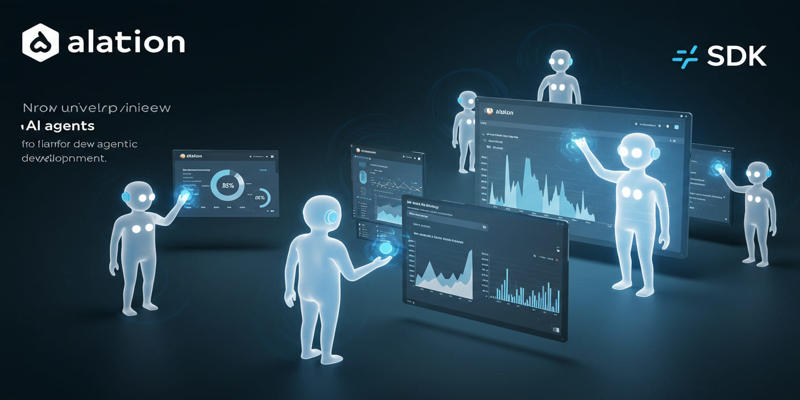 Agentic development has substantially changed how traditional AI assistants and chatbots operate in their current form. The mechanisms of agentic AI execute independently and partially independently rather than serving as responses to user questions. Through autonomous operation, the agents identify insights while offering suggestions as they perform operations independently of human intervention. Research by Gartner shows that agentic AI implementation in enterprise software applications will increase to 33% in 2028 compared to their 2024 presence of less than 1% (2024).
Traditional data management struggled with multiple inefficiencies when manual procedures and scattered information systems were used. These challenges became worse because data volumes were increasing rapidly. According to research by Gartner, many organizations fail to achieve proper governance program scale-up due to limited budgeting powers and tough-to-replicate institutional knowledge while maintaining moderate hiring capacity.
The platform executes repetitive work, including metadata cataloging functions and policy governance implementations. It distributes institutional knowledge across autonomous workflows, and team productivity rises to speed up the delivery of vital business initiatives.
Competitive Landscape
The Agentic Platform will continue beta testing until it launches for general availability during the current year. The system is assured of future success, but its functioning in real environments continues to face doubts. The early implementers who adopt these tools will earn substantial marketplace benefits because they offer improved performance for managing intricate datasets.
The Agentic Platform and AI Agent SDK release from Alation represents a transforming point in data intelligence solution development. The transition to agentic architectures allows Alation to guide the industry shift with tools that resolve present problems and forecast future business requirements. Despite the forthcoming clear assessment of its impact, the platform exhibits unalterable capabilities to transform how organizations manage metadata governance. Businesses that want to excel during the AI era must implement agentic development beyond optional because it represents a strategic necessity.
AI and the Metaverse are shaping the future of online communication by making virtual interactions smarter, more personal, and highly engaging across digital spaces

How search algorithms in AI—like BFS, DFS, and A*—solve real-world problems with smart, structured logic. Simple, practical, and human-written insights
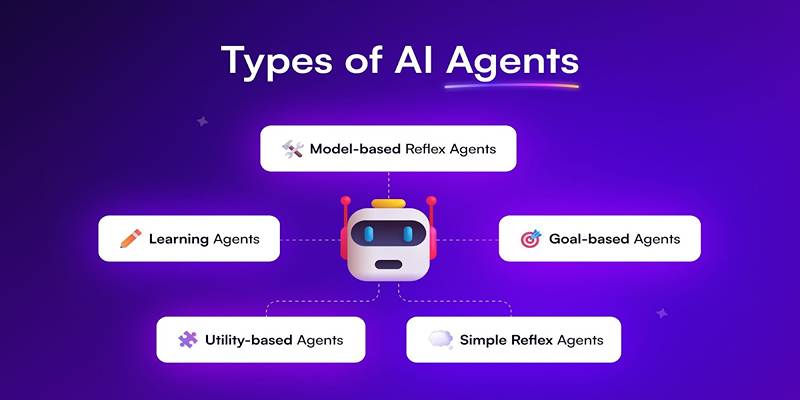
Learn about the main types of AI agents in 2025 and how they enable smart, autonomous decision-making systems.

YouTube channels to learn SQL, The Net Ninja, The SQL Guy

How to set upstream branch in Git to connect your local and remote branches. Simplify your push and pull commands with a clear, step-by-step guide

Discover how hospital IoT, wearable health trackers, and AI‑powered patient monitoring improve healthcare services today

Explore the most popular AI programming languages used in artificial intelligence projects. Learn why Python, R, and Julia are leading choices for developers worldwide

Want to run AI without the cloud? Learn how to run LLM models locally with Ollama—an easy, fast, and private solution for deploying language models directly on your machine
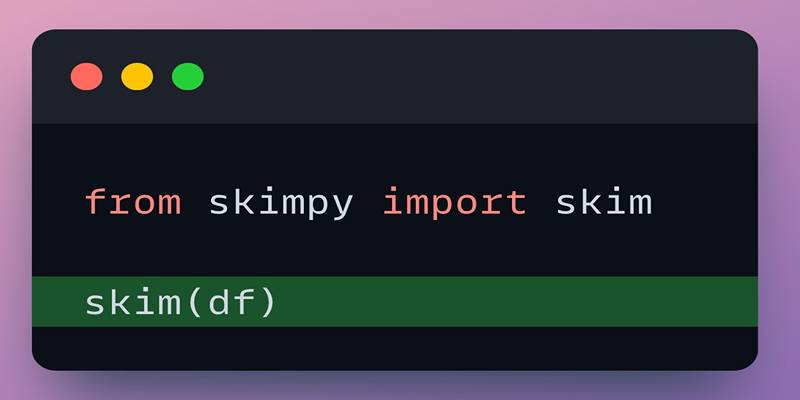
Explore Skimpy, a fast and readable tool that outperforms Pandas describe() in summarizing all data types in Python.

How heuristics and optimization in AI power intelligent systems, blending speed with accuracy to improve AI decision-making and real-world problem-solving

Unlock the potential of AI for market analysis to understand customer needs, predict future trends, and drive smarter business decisions with accurate consumer behavior prediction

Discover how OpenAI’s o1-preview and o1-mini models advance reasoning, efficiency, and safety on the path to AGI.