Artificial intelligence (AI) is quickly changing how machines think, act, and connect with their surroundings. AI applications like voice assistants, smart home devices, and self-driving cars work without any problems, thanks to AI agents. These are intelligent systems that are programmed to feel, think, and act on their own. Over a year, these actors are changing and becoming more skilled.
As you enter 2025, understanding the different types of AI agents is more important than ever. This guide explores their categories, capabilities, and how they are shaping the future of automation, decision-making, and human-computer interaction.
An AI agent is a software-based system that can perceive its environment, process data, and perform actions independently to achieve a goal. Unlike traditional programs that follow static instructions, AI agents adapt their behavior based on real-time input. Whether it's a navigation app finding the fastest route or an AI chatbot answering your queries, agents play a critical role.
These systems mimic human decision-making by evaluating conditions and selecting the best course of action. They’re designed to automate tasks, solve problems, and function in a variety of settings—from predictable to highly complex environments.
These are the most basic forms of AI agents. Simple reflex agents function by responding directly to perceptual input using predefined condition-action rules. There’s no memory or learning involved—just straightforward responses to specific stimuli.
Simple reflex agents rely on sensors to detect conditions and immediately trigger a matching response. For example, a motion sensor that turns on a light operates on a simple rule: “If movement is detected, turn on the light.”
A home thermostat detects room temperature. If it falls below 68°F, the heating system is triggered. No context is needed—the action is purely based on current input.
Model-based reflex agents take things a step further. They maintain an internal model of the world, allowing them to make decisions using both current and past information.
These agents track the state of the environment and update their internal model based on new data. It allows them to make more informed decisions even when the current input is ambiguous or incomplete.
A robotic vacuum learns the layout of your living room as it cleans. If it detects a new obstacle, it refers to its memory to navigate around it without bumping repeatedly into the same object.
Goal-based agents are designed with specific objectives in mind. They evaluate possible actions by considering how well those actions help achieve their defined goal.
These agents assess their environment, define a goal, and then determine the best path to reach that goal. If obstacles arise, they re-evaluate and adjust their plan.
A delivery drone has a goal to drop a package at a specific location. It considers factors like weather, airspace, and route efficiency to plan and modify its journey until the task is completed.
Utility-based agents focus on making optimal decisions by evaluating different actions through a utility function. This function assigns numerical values to various outcomes, and the agent chooses the action with the highest utility.
Rather than simply reaching a goal, utility-based agents ask: “Which outcome is most valuable?” They calculate the probabilities and consequences of each option, selecting the one with the greatest overall benefit.
An autonomous vehicle evaluates whether to change lanes, slow down, or speed up based on passenger safety, fuel efficiency, and traffic flow. The decision that scores the highest utility is chosen.

Learning agents represent the next level of intelligence. They improve over time by interacting with their environment and analyzing feedback. These agents don’t just follow rules—they adapt, evolve, and optimize their performance through experience.
Learning agents begin with a basic knowledge base. As they perform actions and receive feedback (positive or negative), they update their strategies using algorithms such as reinforcement learning, supervised learning, or neural networks.
A game-playing AI like AlphaGo starts by learning basic moves. With each match, it analyzes outcomes, adjusts its strategies, and becomes stronger—eventually outperforming even human champions.
In 2025, AI agents will be embedded in nearly every domain—from personalized healthcare to self-driving logistics.
As AI becomes more embedded in our everyday lives, these agents will not just assist but anticipate needs, improve productivity, and drive innovation.
As you step into 2025, the diversity and capabilities of AI agents continue to grow. From basic reflexes to intelligent learning systems, these agents form the backbone of modern AI applications. Understanding their types, functions, and limitations gives us a clearer picture of how machines will continue to evolve—and how you can build smarter, more responsive, and more helpful technologies in the years to come. AI agents aren’t just tools—they are the decision-makers of the digital future.

Master the Alation Agentic Platform with the API Agent SDK capabilities, knowing the advantages and projected impact.

Explore how Meta AI on WhatsApp is revolutionizing mobile use with smart chats, planning, creativity, and translation.
How AI APIs from Google Cloud AI, IBM Watson, and OpenAI are helping businesses build smart applications, automate tasks, and improve customer experiences
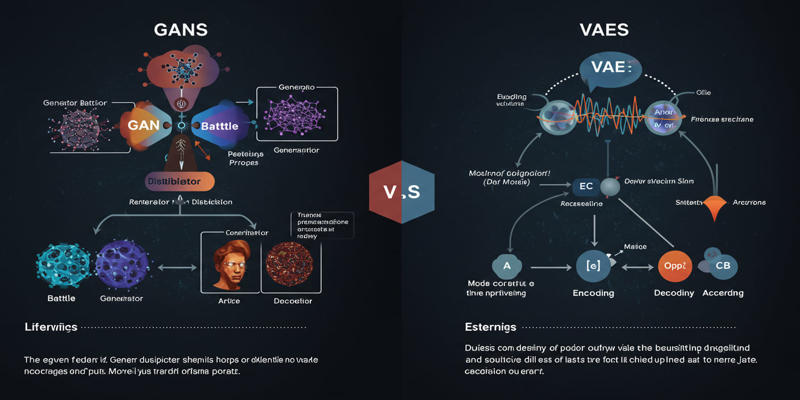
Study the key distinctions that exist between GANs and VAEs, which represent two main generative AI models.

How search algorithms in AI—like BFS, DFS, and A*—solve real-world problems with smart, structured logic. Simple, practical, and human-written insights
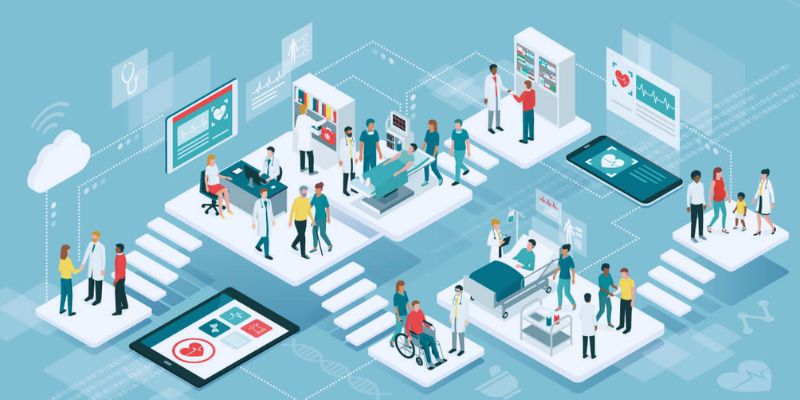
Discover how hospital IoT, wearable health trackers, and AI‑powered patient monitoring improve healthcare services today
Every aspect of OpenAI's GPT-4.5, which presents better conversational performance alongside improved emotional awareness abilities and enhanced programming support and content creation features

Unlock the potential of AI for market analysis to understand customer needs, predict future trends, and drive smarter business decisions with accurate consumer behavior prediction
AI and the Metaverse are shaping the future of online communication by making virtual interactions smarter, more personal, and highly engaging across digital spaces

How heuristics and optimization in AI power intelligent systems, blending speed with accuracy to improve AI decision-making and real-world problem-solving

Explore the most popular AI programming languages used in artificial intelligence projects. Learn why Python, R, and Julia are leading choices for developers worldwide
Drive more traffic with ChatGPT's backend keyword strategies by uncovering long-tail opportunities, enhancing content structure, and boosting search intent alignment for sustainable organic growth