Every intelligent action by a machine—from solving puzzles to plotting GPS routes—relies on core logic called search algorithms. These aren’t about web searches; in AI, they explore possible paths to reach a goal. Whether moving from point A to B or playing chess, the system uses structured techniques like BFS, DFS, and A* to make smart decisions.
These methods help AI find solutions without guessing. While they might not be flashy, they’re essential. They’re the quiet force behind how machines think, plan, and act—simple yet powerful tools that drive everything from chatbots to robots in practical, intelligent ways.
BFS is the friendly, methodical type. It explores a search space level by level, checking all immediate options before diving deeper. Think of it as someone trying to find the nearest coffee shop by visiting every block around their house and then moving outward block by block. That's BFS in action.
BFS in AI is ideal for finding the shortest path in unweighted graphs. It explores all options at one level before moving deeper, ensuring the shortest solution if it exists. However, it uses significant memory since it stores all current-level paths. This makes it less suitable for deep or infinite search spaces where memory efficiency becomes critical.
Technically, BFS uses a queue data structure. Nodes are added to the back and removed from the front, keeping the order of exploration clean and predictable. In problems like solving a Rubik's Cube or planning routes on a simple map, BFS is a solid go-to.
But BFS also hits a wall in complex scenarios. Its memory needs to balloon quickly, which can make it impractical for larger problems. Still, for those cases where precision and shortest paths matter—and where the search space isn't too wide—it's a very dependable method.
DFS is BFS’s impulsive sibling. Instead of exploring broadly, it dives deep into one path as far as it can go before backtracking. It’s like hiking through a forest and following one trail until it ends, then turning back and trying the next one. DFS isn’t looking for the closest solution—it’s chasing the first complete one it can find.

This approach uses a stack structure, either explicitly or via recursion. Nodes are explored deeply before moving to the next sibling. This makes DFS memory-efficient compared to BFS because it only needs to remember the path it's currently exploring. That said, it doesn’t guarantee the shortest path. In fact, it might find a solution that’s much longer than necessary—or worse, it might loop forever in an infinite search space if you’re not careful.
DFS is handy when memory is tight, and you're not worried about finding the shortest path. It shines in situations where you need to explore every possibility, like puzzle solving, maze generation, or checking for connected components in a graph. It's also good when the solution is expected to be deep rather than shallow.
However, its biggest risk is its blind spots. Without constraints, DFS can get lost or stuck. That's why many AI applications prefer controlled versions of DFS, such as depth-limited or iterative deepening search. These introduce smart boundaries that keep DFS efficient without letting it wander endlessly.
A* is the strategist among search algorithms in AI. It merges the broad reach of BFS with predictive insight using a clear formula:
f(n) = g(n) + h(n)
Here, g(n) is the actual cost to reach a node, and h(n) is a heuristic—an educated guess of the cost to get from that node to the goal.
What makes A* powerful is that heuristic. It helps the algorithm zero in on likely paths while skipping over dead ends. This approach makes A* faster and more efficient in finding good paths, which is why it's used in GPS systems, robotics, and video game AI.
The catch is that A* relies on the quality of the heuristic. A poor guess makes it sluggish—or worse, unreliable. To work well, the heuristic must be admissible (it never overestimates the actual cost) and consistent (it maintains logical estimates across nodes).
Despite the memory demands—since A* stores multiple paths—its predictive focus often reduces the actual work needed. It strikes a rare balance: smart, accurate, and efficient. In real-world AI systems, that’s gold. A* often becomes the go-to choice where precision meets performance.
Search algorithms in AI aren’t just academic—they’re the groundwork behind real, functioning intelligence. BFS, DFS, and A* each bring a unique mindset to problem-solving, tailored for different needs.

When you need the shortest and most certain route, BFS shines. If you're operating under memory constraints and are willing to accept longer paths, DFS offers a more lightweight alternative. For scenarios demanding speed, precision, and informed decisions, A* stands out—assuming your heuristic is well-designed.
These methods aren’t standalone—they’re foundational. Many modern AI systems, from recommendation engines to robotic planning, build their logic on top of these search strategies. A neural network may generate an answer, but choosing the next best move? That’s often driven by structured search.
In game development, these algorithms determine how non-player characters behave. In robotics, they guide machines through physical spaces. Even natural language tasks, like parsing or auto-completing, rely on underlying search techniques.
We’re also seeing hybrid models emerge—traditional algorithms paired with machine learning, where learned patterns guide searches more intelligently. It’s a practical marriage of logic and prediction.
What truly sets these algorithms apart is their elegant simplicity. There are no big datasets, no long training, just reliable rules. They're proof that some of the most important tools in AI are also the most timeless.
Search algorithms in AI—BFS, DFS, and A*—remain essential tools for solving structured problems. They offer different paths to reaching a goal, each with its strengths and trade-offs. While BFS ensures thoroughness, DFS focuses on depth, and A* blends both with intelligent guidance. These methods may seem simple, but they quietly power many smart systems around us. Their continued relevance proves that solid logic and structure are just as important as advanced models in building intelligent solutions.

AI in Supply Chain Optimization helps businesses improve efficiency, reduce costs, and manage risks with smart technology and real-time solutions

Discover these 7 AI powered grammar checkers that can help you avoid unnecessary mistakes in your writing.

JFrog launches JFrog ML through the combination of Hugging Face and Nvidia, creating a revolutionary MLOps platform for unifying AI development with DevSecOps practices to secure and scale machine learning delivery.

How AI’s environmental impact is shaping our world. Learn about the carbon footprint of AI systems, the role of data centers, and how to move toward sustainable AI practices

AI and the Metaverse are shaping the future of online communication by making virtual interactions smarter, more personal, and highly engaging across digital spaces

Explore the most popular AI programming languages used in artificial intelligence projects. Learn why Python, R, and Julia are leading choices for developers worldwide

Master the Alation Agentic Platform with the API Agent SDK capabilities, knowing the advantages and projected impact.
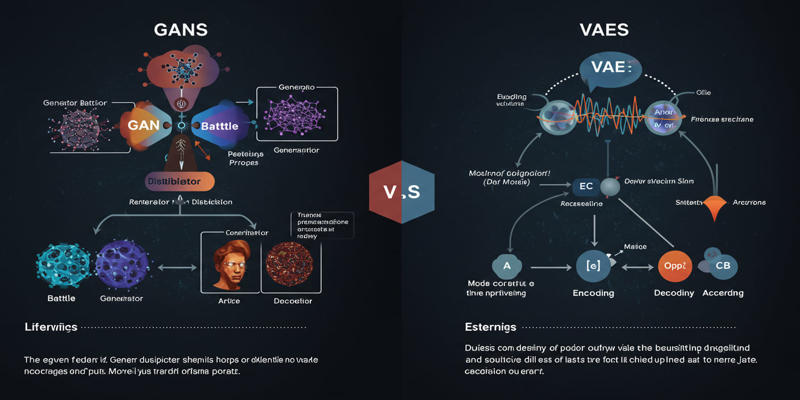
Study the key distinctions that exist between GANs and VAEs, which represent two main generative AI models.

Learn how CrewAI’s multi-agent AI system automates writing full-length articles directly from YouTube video content.

Explore how Meta AI on WhatsApp is revolutionizing mobile use with smart chats, planning, creativity, and translation.

Discover how OpenAI’s o1-preview and o1-mini models advance reasoning, efficiency, and safety on the path to AGI.

YouTube channels to learn SQL, The Net Ninja, The SQL Guy