As artificial intelligence continues to evolve, the long-standing dream of Artificial General Intelligence (AGI)—AI that can reason, learn, and adapt across a wide range of tasks like a human—feels closer than ever. OpenAI's recent release of the o1 model series, specifically o1-preview and o1-mini, is more than just an update—it’s a signal that we’re moving steadily in the direction of AGI.
The o1 series, introduced in September 2024 under the announcement “Learning to Reason with LLMs,” represents a distinct shift in how AI is trained to handle reasoning. These models are built to think before responding, engaging in a deeper, internal chain of thought that allows for more reflective and deliberate answers. This new architecture is a promising leap toward building machines that don’t just generate outputs—they understand, evaluate, and decide.
This post will explore the core differences between o1-preview and o1-mini, understand their design philosophies, and examine how both contribute uniquely to the broader AGI vision.
Unlike earlier models that relied purely on vast datasets and prompt tuning, OpenAI’s o1 models are trained using reinforcement learning, encouraging them to simulate internal reasoning paths before arriving at a final answer. It gives the model time to weigh its options, consider possibilities, and articulate more contextually rich responses.
Where earlier AI might rush to a conclusion, o1 models pause to "think." This subtle but powerful change brings them one step closer to human-like reasoning—a fundamental requirement for AGI.
OpenAI’s decision to release two separate versions—o1-preview and o1-mini—is not about replacing one with the other but about balancing trade-offs. Each is designed for a different purpose and user base, and together, they reflect the dual priorities of the AI field: powerful reasoning and practical efficiency.
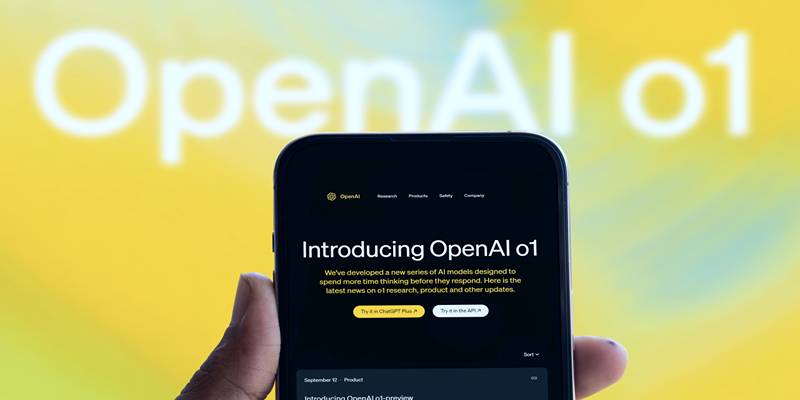
This model is designed for comprehensive reasoning and broader knowledge coverage. It’s ideal for users who require depth, nuance, and flexibility across a wide range of subjects, particularly non-STEM areas.
Key highlights:
In essence, o1-preview aims to act like a well-read expert—slightly slower but highly dependable in handling layered, intricate queries.
On the other hand, o1-mini is engineered with efficiency and specialization in mind. Optimized for speed and computational cost, this model is a better fit for tasks where fast processing and STEM-specific performance are crucial.
Key traits include:
With o1-mini, OpenAI offers a lightweight powerhouse that brings exceptional performance to focused domains without overwhelming system resources.
Despite their differences, both models share a common goal: advancing machine reasoning and bringing us closer to AGI. Each serves a distinct role in the broader AI ecosystem:
Together, they provide researchers, developers, and organizations with flexible tools tailored to different reasoning contexts—whether that’s an academic paper generator, a code assistant, or a smart chatbot.
As AI becomes more capable, ensuring that models behave safely and ethically is non-negotiable. OpenAI has implemented rigorous safety evaluations across both o1 models. These include:
Both o1-preview and o1-mini reflect OpenAI’s continued commitment to aligning AI systems with human values and ensuring they act responsibly under real-world conditions.
One of the notable shifts with the o1 release is the focus on accessibility. By offering o1-mini as a lighter, more efficient option, OpenAI has made it easier for developers to integrate powerful AI into their workflows—whether on mobile apps, edge devices, or cost-sensitive platforms.
Rate limits for both models have also improved:
These improvements suggest OpenAI is moving toward a future where advanced reasoning capabilities are not just powerful—but widely available.

The development of o1-preview and o1-mini isn’t just a technical milestone—it’s a philosophical one. For the first time, we're seeing models that don’t just mimic reasoning but engage in it.
By training these systems to think through problems before responding, OpenAI has introduced an approach that mirrors how humans process complex information. It’s not just about getting the answer right—it’s about how the answer is formed.
Together, these elements suggest that AGI isn’t a single future event—it’s a series of deliberate steps, and the o1 series is one of the most important yet.
OpenAI’s o1-preview and o1-mini models represent a meaningful stride toward Artificial General Intelligence. Both variants reflect different strengths—o1-preview excels in nuanced reasoning and broad knowledge, while o1-mini delivers speed and precision in STEM domains. Their design showcases OpenAI’s commitment to developing intelligent systems that are both powerful and accessible. With reinforcement learning and internal reasoning chains, these models simulate thought processes that edge closer to human-like cognition.

AI in drug discovery is transforming medical research by speeding up drug development, reducing costs, and enabling personalized treatments for patients worldwide
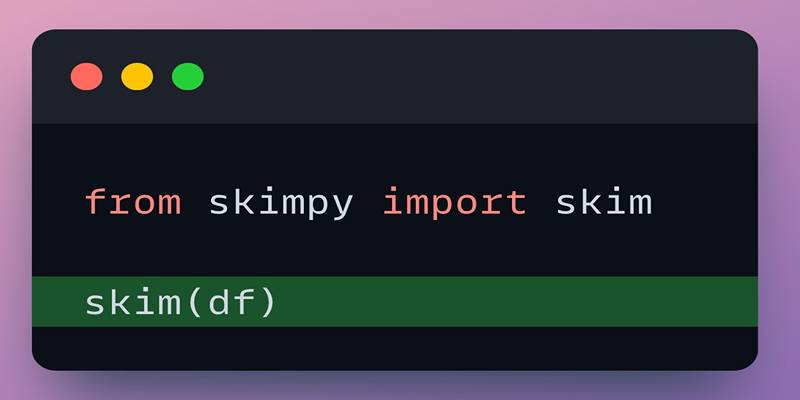
Explore Skimpy, a fast and readable tool that outperforms Pandas describe() in summarizing all data types in Python.

Unlock the potential of AI for market analysis to understand customer needs, predict future trends, and drive smarter business decisions with accurate consumer behavior prediction

Discover the most used Power BI charts to enhance your reports. Learn how each chart improves data visualization and insight.

AI in Supply Chain Optimization helps businesses improve efficiency, reduce costs, and manage risks with smart technology and real-time solutions

AI and the Metaverse are shaping the future of online communication by making virtual interactions smarter, more personal, and highly engaging across digital spaces

Discover these 7 AI powered grammar checkers that can help you avoid unnecessary mistakes in your writing.
JFrog launches JFrog ML through the combination of Hugging Face and Nvidia, creating a revolutionary MLOps platform for unifying AI development with DevSecOps practices to secure and scale machine learning delivery.
Master how to use DALL-E 3 API for image generation with this detailed guide. Learn how to set up, prompt, and integrate OpenAI’s DALL-E 3 into your creative projects

Explore how Meta AI on WhatsApp is revolutionizing mobile use with smart chats, planning, creativity, and translation.

Learn how CrewAI’s multi-agent AI system automates writing full-length articles directly from YouTube video content.
Every aspect of OpenAI's GPT-4.5, which presents better conversational performance alongside improved emotional awareness abilities and enhanced programming support and content creation features