Artificial Intelligence is changing the way the world works — from voice assistants on our phones to smart systems in business, healthcare, and beyond. But none of this happens without the right programming language working quietly in the background. In the world of AI development, the choice of language can shape everything — speed, accuracy, and even the success of a project.
That’s why Python, R, and Julia have earned their place at the top. These languages aren’t just tools — they’re the building blocks that help developers turn ideas into real-world AI solutions that learn, improve, and make life easier.
Programming languages play a much bigger role in AI development than simply writing lines of code. AI is all about solving real-world problems, learning from data, and making smart decisions. But none of this happens without the right tools behind the scenes. The programming language used in an AI project directly impacts how fast the system learns, how easily developers can build solutions, and how well the system performs when dealing with complex tasks. Different parts of AI, like machine learning, data analysis, or deep learning, require specific libraries and frameworks to function smoothly.
Some languages have intrinsic tools for working with big datasets, and others have velocity and accuracy for complex computations. That's why selecting the best programming language is more than merely a technical decision—it's a strategic one that determines the whole project. Among all options, Python, R, and Julia stand out as the most popular AI programming languages for their unique strengths and practical benefits.
Python is usually the language one thinks of when talking about trending AI programming languages. Its success in AI is not by coincidence. Python boasts simple syntax, readability, and easy-to-follow structure. All these make it a perfect language for individuals who desire to work on solving AI issues without battling complex coding principles.
One of Python’s strongest features is its vast ecosystem of AI libraries. Tools like TensorFlow, PyTorch, Scikit-learn, and Keras make AI development easier and faster. These libraries handle complex tasks such as building neural networks, performing data analysis, and training machine learning models.
Another reason for Python's popularity is its community support. With millions of users worldwide, there is no shortage of tutorials, forums, and documentation available. This strong community ensures that developers can find solutions to their problems quickly.
Python is not just about simplicity; it's also highly flexible. It supports multiple programming paradigms, such as object-oriented, procedural, and functional programming. This flexibility allows developers to design AI models that best suit their project needs.
Python is a reliable tool for AI projects that involve data manipulation, visualization, and rapid prototyping. It continues to dominate the AI world because it strikes the right balance between simplicity, power, and versatility.
While Python often steals the spotlight, R has carved out a niche for itself in AI development, especially in data analysis and statistical computing. R is widely used by data scientists who work with large datasets, perform complex statistical modeling, or need advanced data visualization tools.
R was designed specifically for data analysis and statistics, which makes it particularly useful for AI projects that rely heavily on data exploration and preparation. In fact, many machine learning tasks involve cleaning, visualizing, and analyzing data before building predictive models—areas where R excels.
Popular AI programming languages like R provide built-in support for a range of statistical techniques. Packages such as caret, randomForest, and e1071 allow users to build machine learning models directly in R. Its visualization libraries, like ggplot2, produce high-quality charts and graphs that help developers understand patterns in the data.
R is commonly used in academic research, healthcare, finance, and industries where statistical accuracy is critical. Its user-friendly syntax for statistical operations makes complex tasks manageable for experts in these fields.
Although R may not have as many deep learning libraries as Python, it still holds an essential place in AI development. For projects centered around statistics and data analysis, R is often the best tool for the job.
Julia is a relatively new language in the world of AI, but it has gained significant attention for its speed and performance. Developed with scientific computing in mind, Julia is designed to handle mathematical operations and large-scale numerical analysis efficiently. This performance makes Julia one of the most promising names among popular AI programming languages.
Unlike Python and R, which sometimes rely on external libraries written in C or C++ for faster computations, Julia offers speed directly within its core language. This means developers can write high-level code that runs almost as fast as low-level code, combining the best of both worlds.
Julia excels in areas such as machine learning, optimization, and simulations that require heavy mathematical calculations. Its built-in support for parallel and distributed computing allows AI models to run seamlessly across multiple cores or even multiple machines.
In addition, Julia has growing libraries for AI and machine learning, such as Flux.jl and MLJ.jl. While its ecosystem is not as mature as Python’s, it is expanding rapidly due to increasing interest from the AI community.
Julia’s clean syntax, strong performance, and ease of use make it an excellent choice for developers looking for speed without sacrificing productivity. For projects that demand real-time data processing or complex mathematical modeling, Julia offers a fresh and powerful alternative.
Python, R, and Julia are the most popular AI programming languages, each offering unique strengths. Python stands out for its simplicity and extensive AI libraries. R is highly effective for data analysis and statistical modeling. Julia provides exceptional speed and performance for complex AI tasks. The choice between them depends on project needs, but all three play a vital role in modern AI development. Learning these languages helps developers build smarter solutions and stay competitive in the growing world of artificial intelligence.

Explore the most popular AI programming languages used in artificial intelligence projects. Learn why Python, R, and Julia are leading choices for developers worldwide

Discover how OpenAI’s o1-preview and o1-mini models advance reasoning, efficiency, and safety on the path to AGI.
Discover how Replit Agent simplifies coding, testing, and deployment using natural language in an all-in-one platform.

How search algorithms in AI—like BFS, DFS, and A*—solve real-world problems with smart, structured logic. Simple, practical, and human-written insights
Study the key distinctions that exist between GANs and VAEs, which represent two main generative AI models.

Discover these 7 AI powered grammar checkers that can help you avoid unnecessary mistakes in your writing.

How AI’s environmental impact is shaping our world. Learn about the carbon footprint of AI systems, the role of data centers, and how to move toward sustainable AI practices

Explore how Meta AI on WhatsApp is revolutionizing mobile use with smart chats, planning, creativity, and translation.
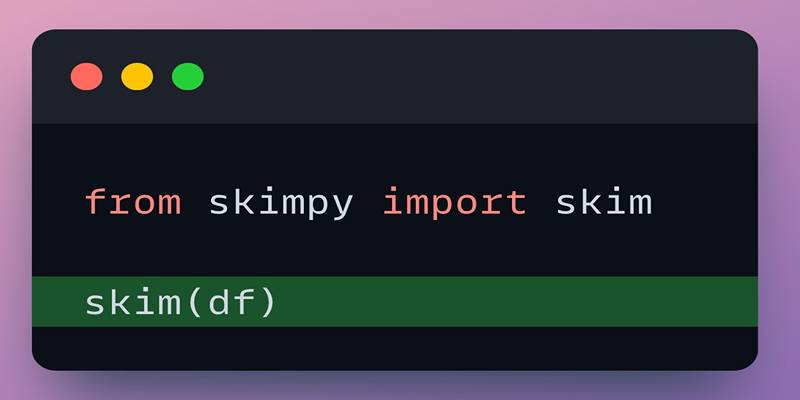
Explore Skimpy, a fast and readable tool that outperforms Pandas describe() in summarizing all data types in Python.

Learn how CrewAI’s multi-agent AI system automates writing full-length articles directly from YouTube video content.

AI in drug discovery is transforming medical research by speeding up drug development, reducing costs, and enabling personalized treatments for patients worldwide

Learn to excel at prompt engineering through 12 valuable practises and proven tips