OpenAI introduced GPT-4.5 as the new generation in its generative pre-trained transformer model family during its February 27th launch. GPT-4.5 arrived on February 27, 2025, to connect customers to GPT-4 technology before GPT-5 performs its anticipated future release. Through GPT-4.5, the model developers added capabilities for more natural and fluid humanlike conversations as well as strengthened emotional intelligence alongside better performance results. The article presents a complete overview of GPT-4.5, featuring its characteristics, training approaches, system uses, and its position relative to preceding models.
 GPT-4.5 from OpenAI stands as the company's top LLM implementation which enhances the core capabilities of GPT-4 while adding major advances for language comprehension and dialogue functionality. The core functionality of GPT-4.5 differs from former models by directing its development toward diverse general-purpose applications which enhances usability for numerous different scenarios.
OpenAI CEO Sam Altman announced GPT-4.5 through a post on X as the "first model that resembles conversing with a philosophical individual" while highlighting its advanced emotional capacity and linguistic sense.
GPT-4.5 brings several disruptive capabilities that differentiate it from previous versions of the system.
This model produces responses that mimic human behavior while showing better capabilities to perceive different components in verbal interactions. The user experience through dialogue becomes smoother because of this improvement.
The new sentiment analysis system of GPT-4.5 allows it to comprehend complex emotional queries. The system understands how to determine between giving advice or just showing understanding toward its users.
The GPT-4.5 system generates text content at an advanced level while producing detailed articles and creative stories together with professional technical documents.
The model generates dense yet specific abstracts from extensive documents better than its predecessors while maintaining high accuracy and understanding.
The 14 supported languages, such as Arabic, Chinese, French, Hindi, Spanish, and Swahili, enable GPT-4.5 to surpass GGPT-4in multilingual benchmark performance.
Using GPT-4.5, developers gain an interactive programming partner that reviews their code while recommending enhancements and generating new application framework bases.
Users can submit files to conduct analysis through the model as well as execute image-based recognition and extraction operations.
OpenAI enacted complex training algorithms to optimize GPT-4.5 performance while eliminating the production of inaccurate outputs known as hallucinations. Key training methodologies include:
Human teachers during this phase instructed GPT-4.5 to respond correctly to instructions and block harmful material from its learning process.
The model used human evaluator rank-based feedback on output quality and helpfulness to develop its responses through multiple evaluation sessions.
GPT-4.5 received training to give preference to system commands even when they contradicted user commands, thus decreasing potential points of attack through prompt insertion.
Several combined methods work together to build a reliable model that delivers safe results thatmatch user objectives.
 GPT-4.5 provides multiple uses within different business sectors because of its flexible design.
Its natural conversational skills enable businesses to apply it as a smart chatbot solution that responds to intricate customer inquiries compassionately.
GPT-4.5 functions as a digital educational guide by creating specialized lessons for students who want to learn mathematics, history, and more subjects.
Healthcare workers use GPT-4.5 to extract valuable information from medical publications and offer clinical support to patients according to medical ethics principles.
The text-generation capabilities of GPT-4.5 let writers, marketers, and journalists create content through article drafts and ad content, and it helps them generate novel creative concepts.
Developers receive benefits through GPT-4.5 by getting coding support functions that optimize debugging tasks while shortening project execution times.
While both models share foundational similarities as transformer-based LLMs, key differences distinguish GPT-4 from its successor:
Feature | GPT-4 | GPT-4.5 |
|---|---|---|
Release Date | March 2023 | February 2025 |
Focus Area | Multimodal capabilities | General-purpose AI |
Conversational Abilities | Advanced | Highly nuanced |
Emotional Intelligence | Limited | Enhanced |
Multilingual Proficiency | Moderate | Superior |
Hallucination Rate | Higher | Lower |
These enhancements make GPT 4.5 a more versatile tool for both general users and specialized professionals.
The upgrades in GPT 4.5 do not offset its existing obstacles:
OpenAI requires effective approaches to tackle these obstacles during its continuing development of AI technologies.
GPT-4.5 marks an important advancement for OpenAI, which enables the company to develop intuitive AI systems that drive industrial transformation across the globe. GPT-4.5 defines modern generative AI because it combines improved dialogue capabilities with emotional processing, supports multiple languages, and generates complete written material effectively.
Organizations' integration of AI into operational systems depends on tools such as GPT-4.5, which serves as a fundamental mechanism for technological advancement alongside standard ethical practices. Learning about the features of GPT-4.5 enables developers and enterprises to maximize its capabilities and benefits in modern technology development.
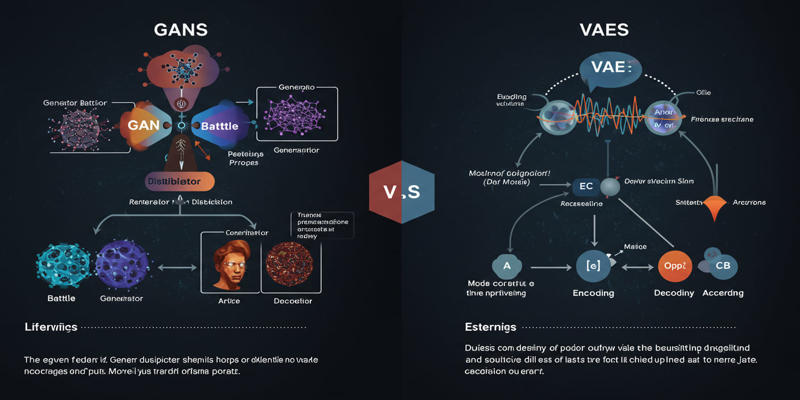
Study the key distinctions that exist between GANs and VAEs, which represent two main generative AI models.
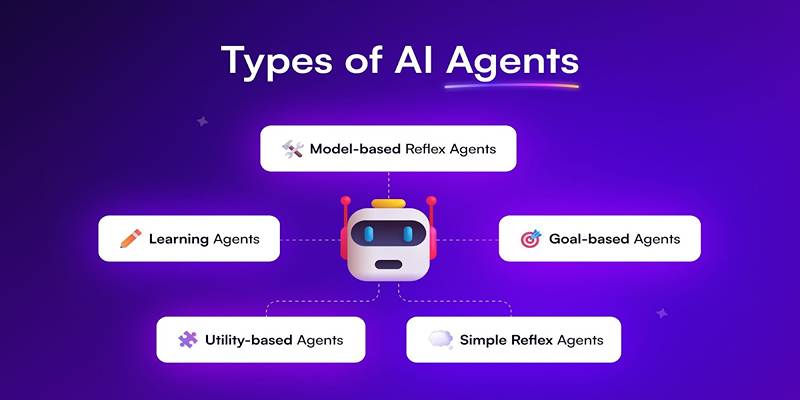
Learn about the main types of AI agents in 2025 and how they enable smart, autonomous decision-making systems.

Discover how OpenAI’s o1-preview and o1-mini models advance reasoning, efficiency, and safety on the path to AGI.

How heuristics and optimization in AI power intelligent systems, blending speed with accuracy to improve AI decision-making and real-world problem-solving

Explore the most popular AI programming languages used in artificial intelligence projects. Learn why Python, R, and Julia are leading choices for developers worldwide

Learn to excel at prompt engineering through 12 valuable practises and proven tips

Discover these 7 AI powered grammar checkers that can help you avoid unnecessary mistakes in your writing.

Unlock the potential of AI for market analysis to understand customer needs, predict future trends, and drive smarter business decisions with accurate consumer behavior prediction
Every aspect of OpenAI's GPT-4.5, which presents better conversational performance alongside improved emotional awareness abilities and enhanced programming support and content creation features

Master how to use DALL-E 3 API for image generation with this detailed guide. Learn how to set up, prompt, and integrate OpenAI’s DALL-E 3 into your creative projects

How AI’s environmental impact is shaping our world. Learn about the carbon footprint of AI systems, the role of data centers, and how to move toward sustainable AI practices

Discover how autonomous robots can boost enterprise efficiency through logistics, automation, and smart workplace solutions