Artificial Intelligence is no longer futuristic—it's already shaping how we live and work every day. From voice assistants giving quick answers to chatbots helping customers online, AI quietly powers many of the tools we rely on. But businesses don't build these smart systems alone. They use AI APIs, powerful tools developed by companies like Google Cloud AI, IBM Watson, and OpenAI.
These off-the-shelf solutions allow you to integrate sophisticated features such as speech recognition, language processing, and machine learning. In this article, we will see how these AI APIs are revolutionizing technology and enabling companies to innovate faster than ever.
AI APIs, or Application Programming Interfaces, are similar to preexisting building blocks for incorporating artificial intelligence into apps, sites, and software. Rather than building a full AI system from the ground up—which may take time, money, and know-how—developers simply tap into these APIs to gain access to sophisticated features.
These tools make it easy to add smart capabilities like speech-to-text, image recognition, language translation, chatbots, and data analysis. Because AI APIs are based on powerful cloud infrastructure, companies don't need to worry about installing complicated hardware or handling servers. Everything is done online, saving time and money.
What makes AI APIs even more valuable is their accessibility. Small businesses and startups, which might not have dedicated AI teams, can still develop intelligent solutions at a low cost and in a short time. These tools make advanced technology accessible to everyone, bringing the playing field in software development to a level and enabling businesses to remain competitive in a rapidly changing digital world.
IBM Watson is another strong player in the AI API field. It became popular after its famous victory on the TV show Jeopardy!, where it defeated human contestants using its advanced question-answering abilities. Today, IBM Watson provides a range of APIs that businesses use to build smart applications.
IBM Watson offers APIs for language understanding, speech services, visual recognition, and machine learning. The Watson Assistant API is widely used to create chatbots and virtual agents for customer service. It allows businesses to build AI systems that understand natural language and respond intelligently to customer queries.
The Watson Natural Language Understanding API helps analyze emotions, keywords, and topics from text data. IBM Watson's Speech-to-Text and Text-to-Speech APIs enable voice-based applications, while its Visual Recognition API allows developers to train models for image classification.
A unique feature of IBM Watson is its focus on explainable AI. It provides tools that help businesses understand how AI systems reach decisions. This is useful in industries like healthcare and finance, where transparency is essential.
IBM Watson supports a wide range of industries and focuses on building trusted and responsible AI. It allows businesses to manage data privacy, security, and compliance while using advanced AI features.
Google Cloud AI is among the most popular platforms for AI APIs. It provides a wide range of tools that enable developers to include smart features in their software easily. Google's powerful infrastructure supports the tools, which are fast and trustworthy.
Google Cloud AI offers APIs for natural language processing, speech recognition, image analysis, and translation. Natural Language API assists in analyzing and interpreting text, while Vision API enables apps to detect objects, faces, and even handwriting within images. Google's Text-to-Speech and Speech-to-Text APIs are widely used in voice assistants and customer service robots.
One of Google Cloud AI's most impressive features is AutoML, which allows companies to train custom machine learning models without needing in-depth knowledge of AI. It provides flexibility and helps businesses fine-tune their AI systems based on their specific data.
Google Cloud AI focuses on security, scalability, and ease of use. It provides detailed documentation and guides for developers, making it easy even for beginners to get started. Many industries, including healthcare, finance, and retail, use Google Cloud AI to improve customer experiences and automate processes.
OpenAI is known for creating some of the most advanced AI systems available today. Its AI APIs are widely used by developers looking to add intelligent language capabilities to their applications. OpenAI's API platform is built on powerful GPT (Generative Pre-trained Transformer) models, which are known for their ability to generate human-like text.
The OpenAI API allows developers to build tools that can answer questions, summarize content, write emails, generate reports, and create chatbots. It provides a wide range of language-based features that are hard to match.
OpenAI also offers the Whisper API for speech recognition and DALL·E for image generation based on text prompts. These APIs help businesses create highly creative and interactive applications.
What sets OpenAI apart is its focus on natural language generation and understanding. Its models are trained on vast amounts of text data, allowing them to produce detailed and relevant responses. Developers use the OpenAI API to create content tools, virtual assistants, customer support bots, and educational apps.
OpenAI provides clear guidelines for responsible AI use and has tools to filter and manage content generation. Its flexible pricing model and developer-friendly platform make it accessible to businesses of different sizes.
AI APIs have become essential tools for businesses that want to stay competitive in a digital world. They offer easy access to advanced features like language processing, speech recognition, and image analysis without building complex systems from scratch. Platforms like Google Cloud AI, IBM Watson, and OpenAI provide flexible, secure, and powerful solutions for different industries. These tools help companies save time, reduce costs, and create smarter applications. As technology grows, the demand for AI APIs will continue to rise, allowing more businesses to innovate and deliver better customer experiences using ready-made AI solutions from trusted providers and experts.

How search algorithms in AI—like BFS, DFS, and A*—solve real-world problems with smart, structured logic. Simple, practical, and human-written insights

AI in drug discovery is transforming medical research by speeding up drug development, reducing costs, and enabling personalized treatments for patients worldwide
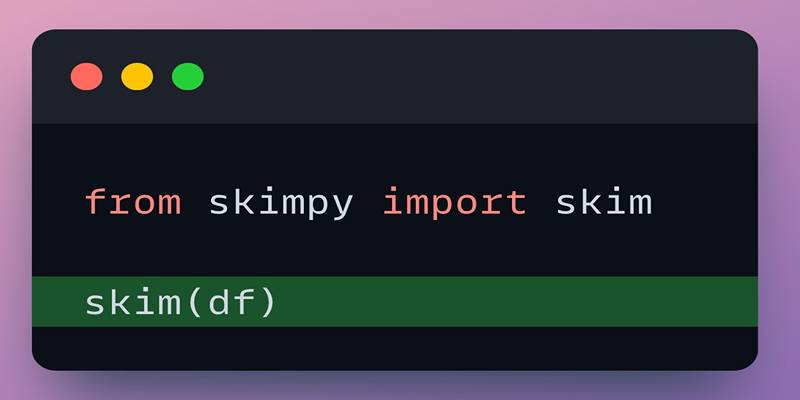
Explore Skimpy, a fast and readable tool that outperforms Pandas describe() in summarizing all data types in Python.

AI and the Metaverse are shaping the future of online communication by making virtual interactions smarter, more personal, and highly engaging across digital spaces

Want to run AI without the cloud? Learn how to run LLM models locally with Ollama—an easy, fast, and private solution for deploying language models directly on your machine

Drive more traffic with ChatGPT's backend keyword strategies by uncovering long-tail opportunities, enhancing content structure, and boosting search intent alignment for sustainable organic growth

Discover how autonomous robots can boost enterprise efficiency through logistics, automation, and smart workplace solutions
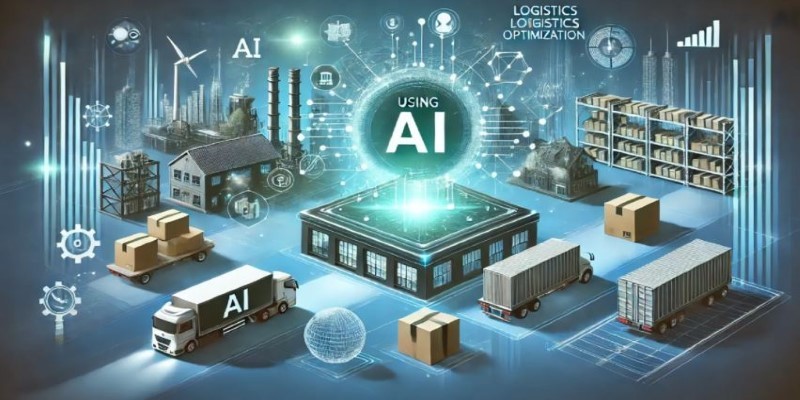
AI in Supply Chain Optimization helps businesses improve efficiency, reduce costs, and manage risks with smart technology and real-time solutions
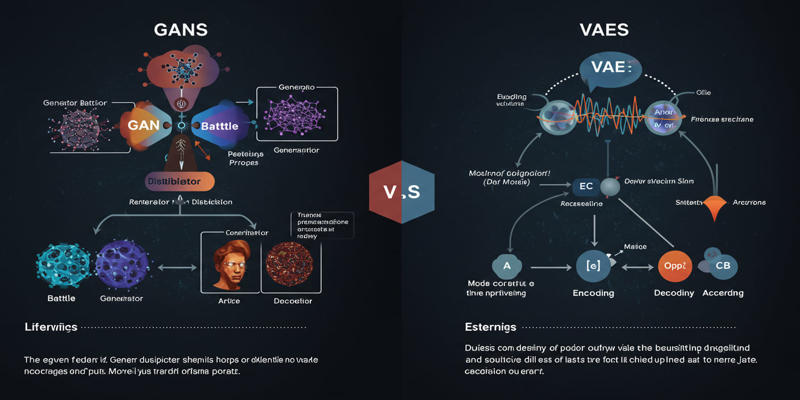
Study the key distinctions that exist between GANs and VAEs, which represent two main generative AI models.

Build a simple LLM translation app using LangChain, LCEL, and GPT-4 with step-by-step guidance and API deployment.

Master how to use DALL-E 3 API for image generation with this detailed guide. Learn how to set up, prompt, and integrate OpenAI’s DALL-E 3 into your creative projects

Learn to excel at prompt engineering through 12 valuable practises and proven tips